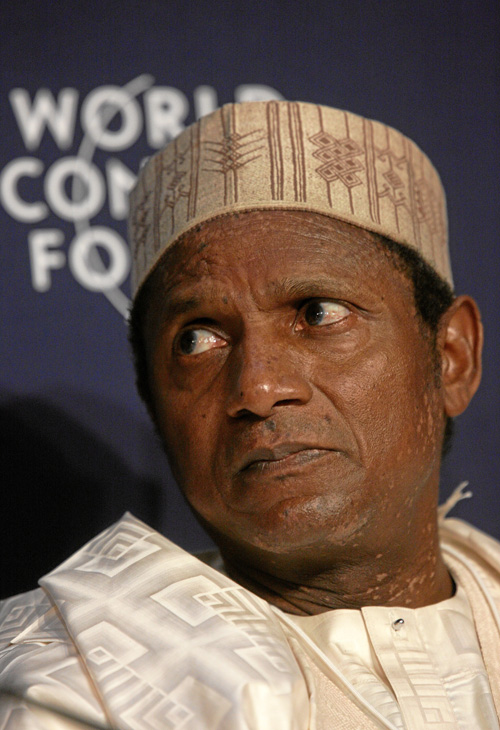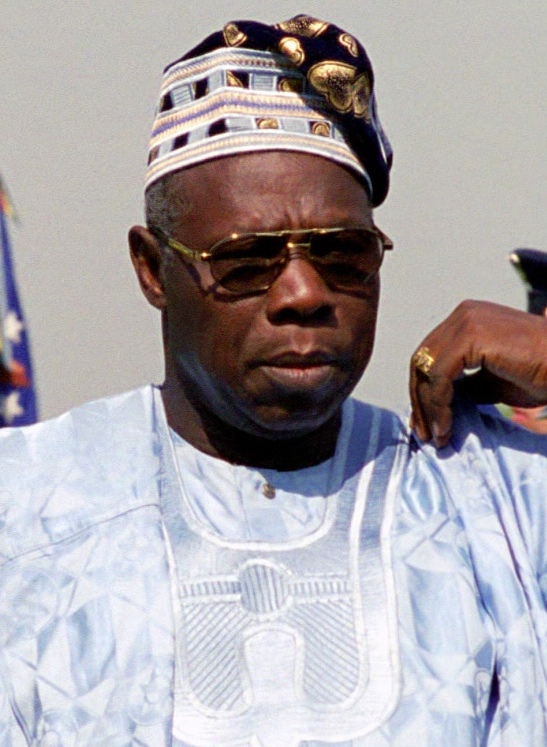
Olusegun Obasanjo is a retired army general who has held Nigeria’s highest office twice: as military head of state from 1976 to 1979, when he handed power to an elected government, and as the first president of the Fourth Republic from 1999 to 2007. Admirers credit him with two transitions to civilian rule, debt relief and the creation of the anti-graft agency; critics point to rights abuses, flawed elections and an attempt to extend his stay in office.1
Early life and military career
Obasanjo was born around 5 March 1937 (the date is an estimate) in Ibogun-Olaogun, in present-day Ogun State, into a Yoruba farming family. He was educated at Baptist Boys’ High School, Abeokuta, and joined the army in 1958, training at Mons Officer Cadet School in England and later in military engineering in Britain and India. He served with the United Nations in the Congo in 1960–61.1
In the civil war he commanded federal forces on the southern front from May 1969, and in January 1970 Biafran leaders surrendered to him after the capture of the Uli airstrip.1
Military head of state (1976–1979)
He was chief of staff to General Murtala Muhammed, and after Murtala was assassinated in February 1976 the Supreme Military Council made him head of state. His government issued the Land Use Decree, launched Operation Feed the Nation, oversaw the drafting of a new constitution and lifted the ban on political parties. In October 1979 he handed over to the elected president, Shehu Shagari.1
That period also saw abuses: soldiers raided Fela Kuti’s Kalakuta Republic in 1977, injuring his mother, Funmilayo Ransome-Kuti, who later died, and 39 people were executed after the failed Dimka coup of 1976.1
Prison and return
Obasanjo farmed in Ota and became an international figure, co-chairing the Commonwealth group that visited South Africa in 1986. A critic of General Sani Abacha, he was arrested in 1995 and convicted over an alleged coup plot, which he denied. He was freed after Abacha’s death in 1998.1
President (1999–2007)
Obasanjo won the PDP ticket and the 27 February 1999 election with 18.7 million votes (62.8%) against Olu Falae, on a turnout of about 52%.2 He was re-elected in 2003.1
His government created the Economic and Financial Crimes Commission, which began work under Nuhu Ribadu in April 2003.3 In October 2005 the Paris Club of creditor nations wrote off $18 billion of Nigeria’s debt, about 60% of what was owed to it, after negotiations led by his finance minister, Ngozi Okonjo-Iweala.4 He also privatised state firms and chaired the African Union from 2004 to 2006.1
His record on security remains contested. In November 1999 soldiers razed the town of Odi in Bayelsa State after the killing of 12 policemen nearby; estimates of the civilian dead range from dozens to several hundred or more. In 2013 the Federal High Court ordered the federal government to pay ₦37.6 billion in compensation, later settled for ₦15 billion.5
In May 2006 the Senate rejected a constitutional amendment that would have let him seek a third term. He never publicly asked for one, but the bill had split the PDP and drew allegations of bribery and pressure on lawmakers; his vice-president, Atiku Abubakar, accused him of undermining the constitution.6 The 2007 election, which passed power to his party’s candidate Umaru Yar’Adua, was condemned by observers as deeply flawed.7
Later life
After leaving office he remained active in African diplomacy and a frequent commentator on Nigerian politics. In March 2026 President Bola Tinubu congratulated him on turning 89.8
Personal life
His wives have included Oluremi Akinlawon, Stella Abebe (who died in 2005) and Mojisola Adekunle; his children include Iyabo Obasanjo-Bello. Raised a Baptist, he describes himself as born again since his imprisonment and later earned a doctorate in theology.1
References
Olusegun Obasanjo. Wikipedia, accessed October 2026. ↩ ↩ ↩ ↩ ↩ ↩ ↩ ↩ ↩
1999 Nigerian presidential election. Wikipedia, accessed October 2026. ↩
Economic and Financial Crimes Commission. Wikipedia, accessed October 2026. ↩
FACT CHECK: Keyamo’s claim that Nigeria’s debt cancellation came on a platter is false. ICIR, 15 October 2018. ↩
Odi massacre. Wikipedia, accessed October 2026. ↩
Nigerian Senate rejects third term for Obasanjo. NBC News, May 2006. ↩
Nigeria: World Report 2008. Human Rights Watch, January 2008. ↩
Tinubu Celebrates Obasanjo At 89. AllAfrica, March 2026. ↩